Game Cameras for Monitoring Animals
References below developed by Jared Char (ANRPO, Animal Program Manager; contact: charjared@gmail.com) and Derek Risch (UH Mānoa, NREM; contact: drisch@hawaii.edu)
Game Camera Comparison Table
Comparison table of four game cameras. Scroll to review camera details–manufacturer, cost, specs, range, battery life, screen features, media format, image settings, data capture, transmitting features–and camera pros (blue) and cons (orange).
Establishing Game Camera Monitoring Points
Scroll through table to review 12 key steps for establishing Game Camera monitoring points, covering monitoring location and site-specific considerations as well as camera set up steps.
This table was developed by Jared Char (ANRPO, Animal Program Manager) and Derek Risch (UH Mānoa, NREM). If you use game cameras to monitor animals and having differing protocols, we want to hear from you! Reach out to EcosystemsExtensionHI@gmail.com
Game Camera Field Checklist
(for set up and camera checks)
This table was developed by Jared Char (ANRPO, Animal Program Manager) and Derek Risch (UH Mānoa, NREM). Feel free to download it as a word document and modify it as is needed to match your game camera set up.
Game Camera Set Height Comparison Table
for Ungulate Monitoring
This table compares pros, and cons and use cases of three general game camera set heights. Table developed by Jared Char (ANRPO, Animal Program Manager) and Derek Risch (UH Mānoa, NREM). Below are example imagery captured at the three height categories. Click on an image to enlarge it. Photos were posted with permission from Jared Char and Derek Risch.
Images: Game Camera Set Heights
 Image 1: Example of high set imagery, can see most of trap |  Image 2: Example of high set imagery, can see most of trap |  Image 3: Example of imagery from camera set between waist and eye-level |
|---|---|---|
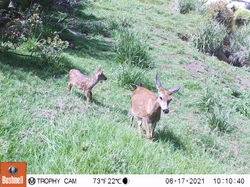 Image 4: Example of imagery from camera set between waist and eye-level, moderate field-of-view |  Image 5: Example of imagery from camera set between waist and eye-level, captures full height of animal |  Image 6: Example of imagery from camera set between waist and eye-level, capturing moderate field-of-view |
 Image 7: Example of imagery from camera set between waist and eye-level, capturing wide field-of-view |  Image 8: Setting game camera at height waist to eye-level |  Image 9: Example of low set (knee level), animal is cut off |
 Image 10: Example of low set (knee level), animal is blurry |  Image 11: Example of low set (knee level) in trap, cannot determine how many animals are present |
Game Camera Rodent Monitoring
Example Study
Study conducted by Army Natural Resources Program, O'ahu (T. Bogardus (USDA-WS) and R.T. Walters)
Find the Rats! Game Camera imagery demonstrating the bias in tracking tunnel data.


Spot the Rat! 2 eyes visible in first image in row, only ONE in second image!
Something missing?
We want to hear from you! Let us know if you see any type-os, have experiences that vary from the information shared, or would like to see additional resources included.